A robot can leave a factory floor long before its parts stop working. The problem is that batteries, motors, sensors, circuit boards, cables, and software may all reach that point at different times.
For an operator replacing aging automation, the disposal plan matters as much as the purchase plan. A machine that cannot be repaired or separated easily can turn a useful upgrade into a difficult waste problem.
- Mixed materials make sorting harder: one robot can combine metal frames, wiring, batteries, boards, plastics, and sealed modules.
- Repair depends on access: a missing service manual or discontinued board can end a robot’s working life.
- Reuse needs preparation: stored data, worn batteries, and safety checks all matter before a machine changes hands.
Why robots create a difficult waste stream
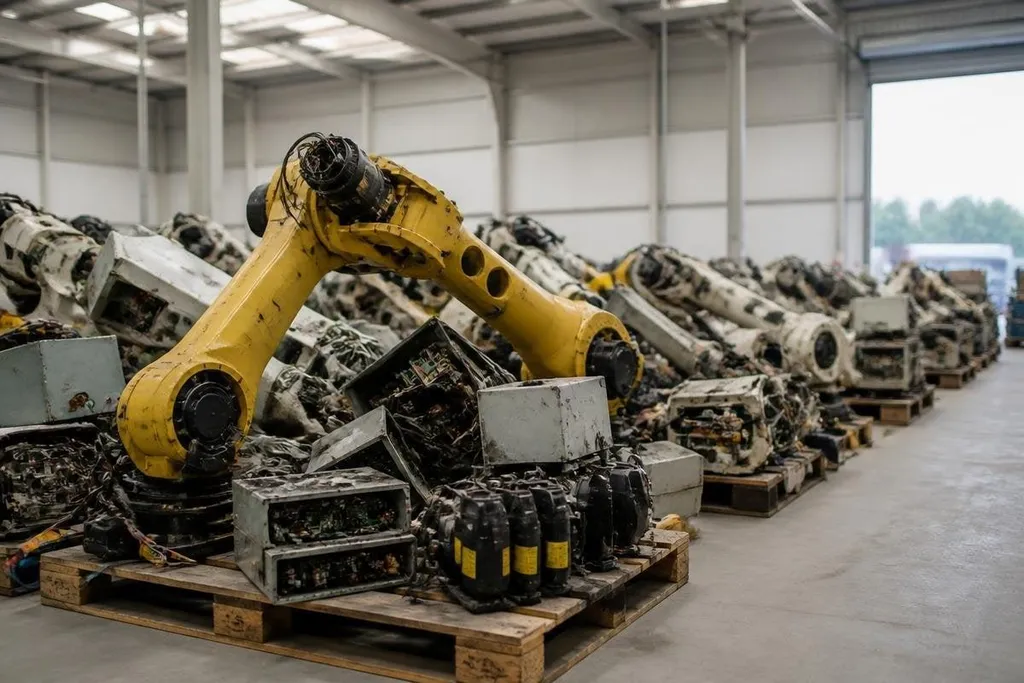
Each robot is a group of connected parts, not one simple item. Its frame may be easy to recycle, while its battery pack, control board, camera, and motor assemblies need separate handling.
That mix creates work at the end of service. Someone must identify the parts, remove stored energy, separate materials, and decide which components can go back into use. If the robot arrives as a sealed unit, those steps take more time and may require special tools.
Batteries need particular care. Damaged lithium-ion cells can create fire risks during storage or transport, so operators need a clear process for isolation and collection. Even a stationary robot may still contain a battery pack with useful energy and a possible fault.
The same issue applies to electronics. Circuit boards contain recoverable materials, but they also belong in controlled electronics recycling streams. Sending a complete robot to general scrap handling can lose those materials and expose workers to parts that need different treatment.
The repair decision starts before purchase
The best time to plan for robotic e-waste is before the machine reaches the site. Buyers can ask whether the maker supplies replacement motors, battery packs, sensors, grippers, and control boards. They can also ask how long those parts will remain available.
Software matters too. A robot may still have sound hardware but lack updates, access keys, or a supported controller. That can block reuse even when the frame and motors have years of service left.
Design details affect the cost of repair. Bolted panels, labeled cables, replaceable batteries, and standard connectors give technicians more options. Glued housings and sealed assemblies can turn a small fault into a full machine replacement.
Repair choices also affect what happens when a robot reaches the end of its service life. Reports from Robot24 can tie claims about take-back plans, battery removal, and parts supply to named companies and dates. That record leads to the next question: what happens to an old robot?
What can happen to an old robot
An old robot does not have only one possible destination. Its next use depends on condition, support, safety, and the cost of inspection.
A machine may return to work after refurbishment. A factory may keep it for spare parts, use it for training, or sell it to a smaller operator with less demanding tasks. Parts such as motors, gearboxes, cameras, and power supplies may also help repair another unit.
Recycling comes later, after reuse options have been checked. That order matters because recovering a working motor usually keeps more value than breaking the motor down for raw material.
Data needs its own step. Robots can store maps, task logs, network details, user accounts, or camera records. Before resale or recycling, the owner should remove data and reset access credentials according to the machine maker’s instructions.
I’d reject any purchase plan that discusses installation but says nothing about repair, resale, or disposal.
A practical e-waste checklist
Use these questions before buying a robot or retiring one:
- List the parts: record the battery type, motor count, sensors, boards, cables, and removable tools.
- Check service support: ask for manuals, repair procedures, software support terms, and part prices.
- Set aside batteries: store damaged or swollen packs away from normal equipment until a qualified handler collects them.
- Test reuse options: inspect the robot for training, lower-demand work, resale, or parts recovery.
- Erase machine data: remove user accounts, maps, logs, network details, and stored video before transfer.
- Get disposal records: keep collection and recycling documents for the machine and its battery pack.
The process also needs an owner. A maintenance lead may know the hardware, while an environmental or facilities team may handle waste collection.
Writing down who makes the final call prevents an old robot from sitting in a storage area until its battery, records, and parts become harder to manage.
Robotic e-waste will grow as more machines enter factories, warehouses, farms, and laboratories, but the size of the problem will depend on what happens before disposal. Buyers who demand service access, replaceable parts, and a clear return route can keep more robots working and send less equipment into the waste stream.